
When a gate alarm is no longer enough: RFID, cameras and retail data in one system
Retail loss is not always theft. A missing item may be the result of an error at goods receipt, placement on the wrong shelf, an unrecorded stock movement, damage, a returns process or actual theft. When systems operate separately, each shows only part of the picture: the gate sounds an alarm, the inventory system reports a discrepancy, and the camera records footage. The essential question remains unanswered: what actually happened?
A SIA Technology Insights article on the combined use of RFID, electronic article surveillance (EAS) and video analytics puts this problem at the centre. This is a guest author's industry perspective, rather than an independent technology test. Even so, it illustrates a direction for retail security: moving from isolated alarms towards information that can be understood and used for operational decisions. SIA Technology Insights – From Loss Prevention to Retail Visibility
One inventory discrepancy, several possible causes
The basic task of conventional merchandise protection remains the same: deter, flag potentially unauthorised removal and support subsequent investigation. An EAS gate alarm does not, by itself, prove theft. A tag may not have been deactivated correctly, an item may have been handled incorrectly, or a technical issue may have triggered the alarm.
The same applies to inventory discrepancies. An item missing from the records may be in the wrong place, still in the stockroom, set aside because it is damaged, or genuinely stolen. A camera may show the circumstances around an event, but it cannot necessarily identify the exact item that moved or establish whether the movement was legitimate.
The useful question is therefore which question each technology can answer.
| Technology | Primary question it answers | Limitation when used alone |
|---|---|---|
| EAS / electronic article surveillance | Was there a potentially unauthorised exit event? | It does not explain why the event occurred. |
| RFID | Which item can be detected at a particular point or stage in a process? | Results depend heavily on installation and tagging. |
| Cameras and video analytics | What happened around the item, customer or employee? | They do not replace item-level identification. |
| POS and inventory data | Does the system show a sale, return or stock movement? | They do not show the full physical context of the event. |
Integration is valuable when it creates a shorter route to a decision, rather than another crowded user interface.
From an alarm to an event that can be assessed
In a well-designed system, an event sequence might look like this:
- Inventory or exit event
- Compare RFID and EAS data
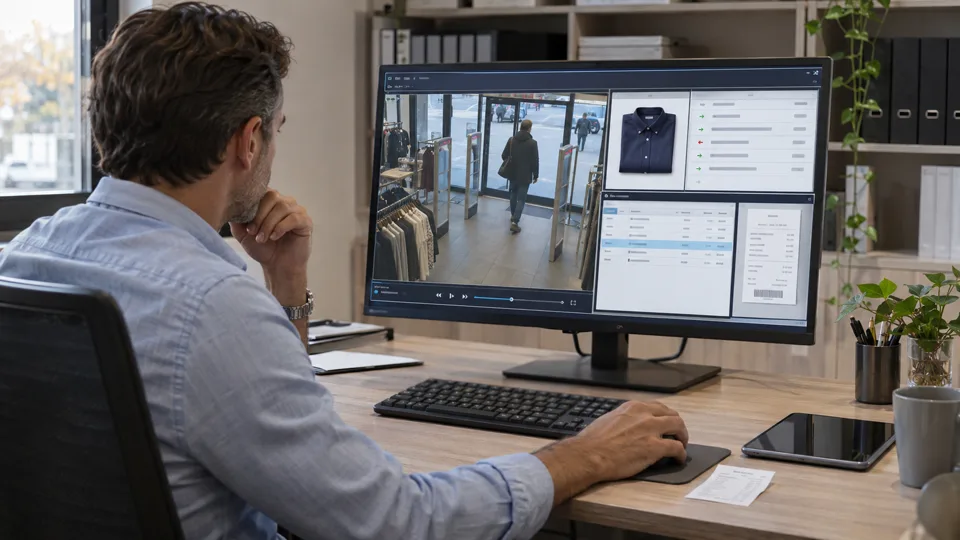
- Open the relevant camera footage and POS data
- Assessment by an operator or store manager
- Classify the event and take proportionate action
Suppose the stock record for a high-value product shows a discrepancy, followed by an alarm at the exit gate. If RFID data can associate an event with that item, the system could prepare footage from the relevant time window and the associated checkout transactions. This still does not automatically establish theft, but the information needed for a check becomes available more quickly and in a more organised form.
The aim is to help the employee responsible for a security or operational decision assess the situation more quickly and with better context, rather than have an algorithm declare what happened.
RFID is more than a faster stocktake
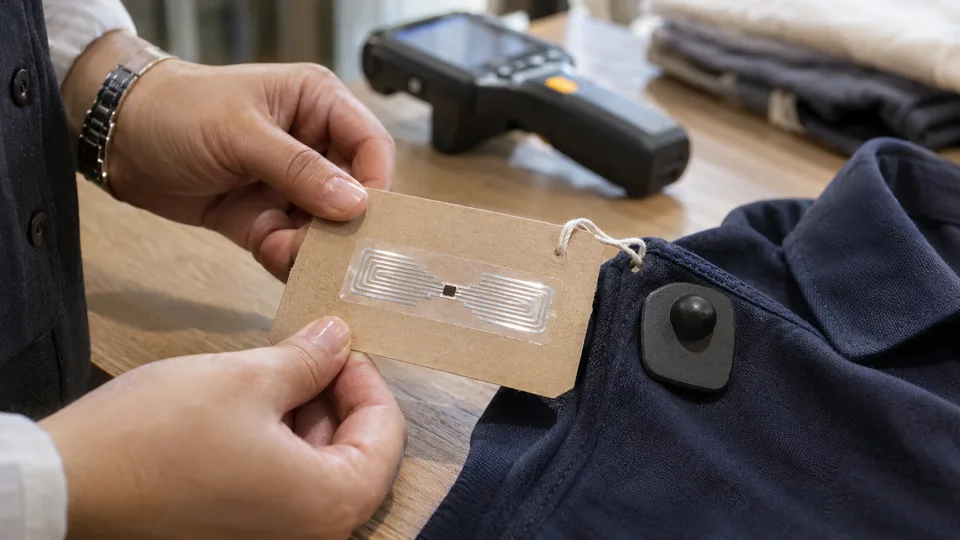
One clear advantage of RFID is that identifying products no longer relies exclusively on barcode scanning and manual counting. With suitable tags, reader placement and process design, it can support goods receipt, movements between the stockroom and sales floor, replenishment and inventory accuracy.
The technology is not a plug-and-play solution. A clothing store, an electronics retailer, a health and beauty store and a warehouse have different stock movements, product types and risks. Tag placement, the radio environment, reading points, products containing metal or liquids, and the store layout can all affect the result.
RFID becomes a useful operational data source when design starts with the business and security questions that need answers, rather than simply where to put the reader.
Video analytics adds context, not a magic solution
Cameras are a key retail security tool, but their role extends beyond reviewing recorded footage. Properly applied video analytics can help reveal patterns around exits, aisles, fitting-room entrances or high-value displays.
Their security value becomes particularly clear when video is linked to a signal from another system. RFID may show that an item's movement differs from what was expected; the camera can help explain whether it was misplaced, moved through an irregular process, damaged, or involved in an event that merits further investigation.
This matters because loss reduction cannot focus exclusively on finding offenders. Recurring discrepancies in a product category may also point to poor shelf layout, an obstructed camera view, insufficient staff coverage or a flawed operational process. In such cases, security technology supplies information that can help improve operations as well as record an event.
Better connections matter more than more data
An integration can fail even when its individual devices work properly, if their data cannot be connected in a useful way.
An effective solution should answer at least these questions:
- Which event does this video segment belong to?
- Which item or product category is associated with the discrepancy?
- Was there a related sale, return or stock-movement transaction?
- Who assesses the event, and under which rules?
- Which cases require a security response, and which call for an operational correction?
Shared timestamps, location identifiers, event identifiers and a consistent investigation process can matter more than another analytics feature. Without them, the operator still has to search across several systems, leaving integration more apparent than real.
Start a pilot with a use case
For a retailer, deploying a complete system across every store and product category at once is unlikely to be the most manageable approach. A more practical starting point is a defined problem: a particularly vulnerable product category, a recurring inventory discrepancy or a problematic exit zone.
During a pilot, useful measurements include:
- the number of inventory discrepancies and their causes;
- the volume of gate alarms and the time needed to assess them;
- the proportion of false alarms or signals that do not require action;
- the time needed to investigate events;
- changes in replenishment processes and inventory accuracy.
Measurement matters because integration's business value lies in faster, more accurate and more consistent decisions, rather than the number of devices installed.
Technology does not replace human responsibility
Connected systems can strengthen situational awareness, but they do not replace appropriate procedures, trained staff or proportionate action. This is particularly relevant where customer behaviour, employees, video footage and sales data are involved.
A good system organises evidence and context for assessment instead of automatically labelling people. The final decision needs a clearly responsible person, a process that can be checked, and operation consistent with applicable data-handling requirements.
The future of retail security: more visible operations
RFID, EAS and video analytics are complementary technologies. Each provides different information: one makes product movement more visible, another flags exit events, and the third shows the surrounding circumstances.
The opportunity is for security investment to support more than investigation after a loss. It can help reveal operational errors, improve inventory accuracy, support replenishment and speed up checks when they are justified.
The question is increasingly whether a retailer can turn separate signals into a shared picture that supports sound security and operational decisions.
Sources: SIA Technology Insights – From Loss Prevention to Retail Visibility (October 29, 2026)
Last reviewed:
Questions, or an idea to talk through?
Whether it is a security system, the IT network behind it or just a thought on this article, I am happy to hear from you.
Get in touch