From detection to decision: 5G drone detection and robot patrols in facility security
One recurring problem in facility security is not whether an unusual event can be detected, but what happens immediately afterwards. An alarm may come from a camera, an access control system, a fence sensor or a guard. Yet the security team often lacks reliable information from the scene to make a decision.
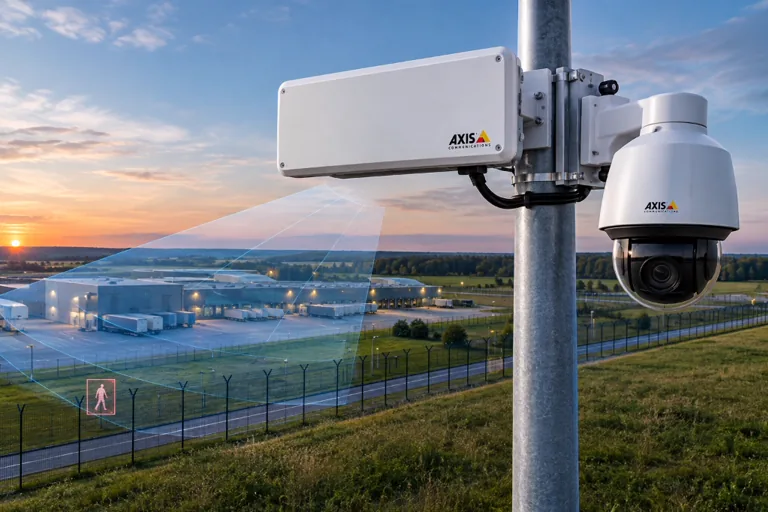
Two recent developments point towards different but potentially complementary answers. An AT&T and Ericsson demonstration explored how the radio infrastructure of az 5G network can detect and track drones. In Singapore, AETOS and dConstruct Robotics announced the development of a robotic security service that could support both patrols and rapid on-site alarm verification.
The two initiatives are not a shared system, and neither establishes a finished solution suitable for general deployment. Considered together, however, they suggest a useful direction: future physical security may depend on connecting detection, verification and human decisions more closely.
An alarm is not the same as situational awareness
Detecting an object does not answer the security team's most important questions. What exactly happened? Is this a real threat, a technical fault or a harmless event? What further information is needed from the scene? Who decides the next step?
Drone detection makes this particularly clear. A low-flying aircraft could be part of an authorised operation, a media flight or maintenance work, but it could also present a security risk. A single sensing signal is therefore insufficient grounds for action. The objective is more than a warning that a drone is nearby: it is an event picture that can be understood and verified.
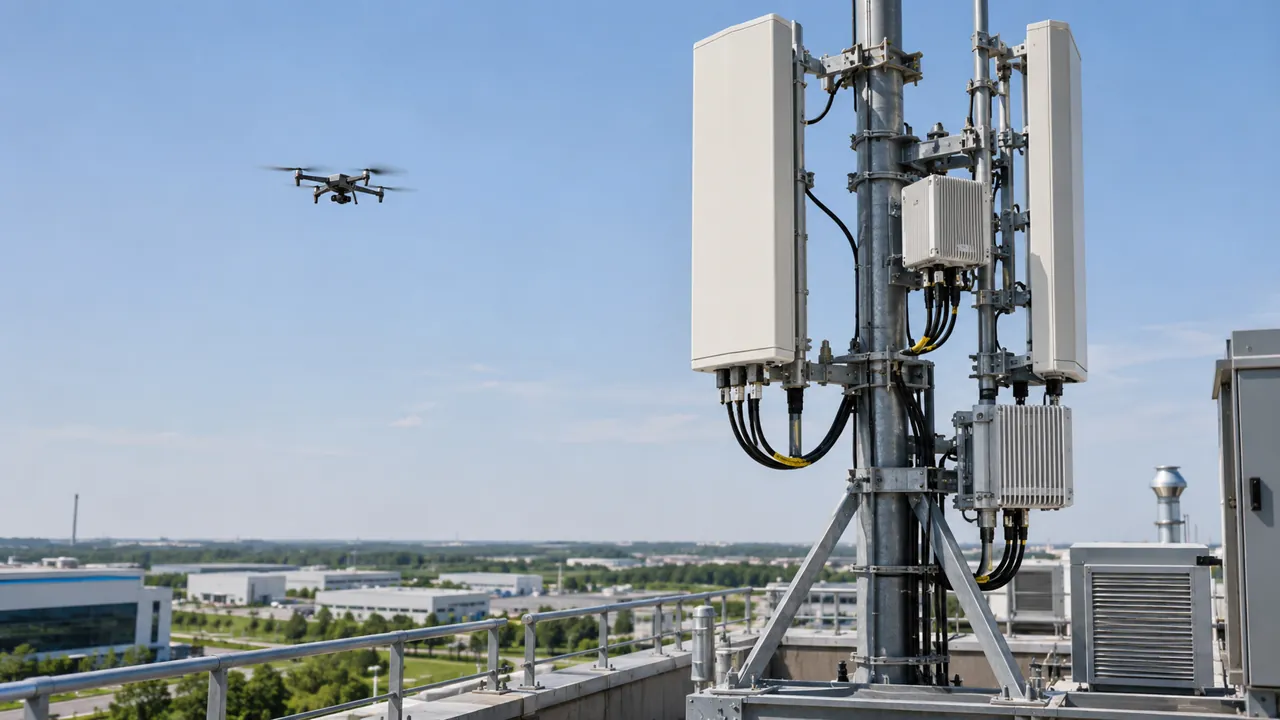
This is where adding sensing capabilities to existing communications infrastructure could matter. In the Texas demonstration, AT&T and Ericsson combined existing cellular infrastructure, Massive MIMO radios, signal processing and AI-enabled sensing algorithms. According to the announcement, they detected, located and tracked multiple drones in real time, generating position, velocity and elevation data. AT&T announcement
The engineering interest of the demonstration is not that a mobile network takes over the role of radar, cameras or other drone detection systems. It is that the network could become an additional distributed sensing layer: another source of information about a drone's movement, direction and approximate position.
Ericsson’s November 2, 2026 ISAC announcement anticipates selected small-scale, sensing-only commercial pilots in 2027 and broader deployments from 2028. Actual performance depends on the target, terrain, sensing geometry and system configuration.
Detection needs confirmation
When protecting a large stadium, industrial plant, port, data centre or critical infrastructure site, an initial detection needs to become a verifiable event quickly. The question is not simply whether an object has been detected in the air, but where it is, which way it is moving, what protected area it might affect, and what additional information could confirm or challenge the suspected risk.
A well-designed process might look like this:
Detection → position estimate → on-site verification → human assessment → proportionate response
5G network sensing could help with the first two steps. It may indicate that an object has entered a designated area and provide information about its movement. The next task is tied to the site: obtaining an image or other evidence that lets the operator decide whether action is required.
This is where mobile robotics enters the picture.
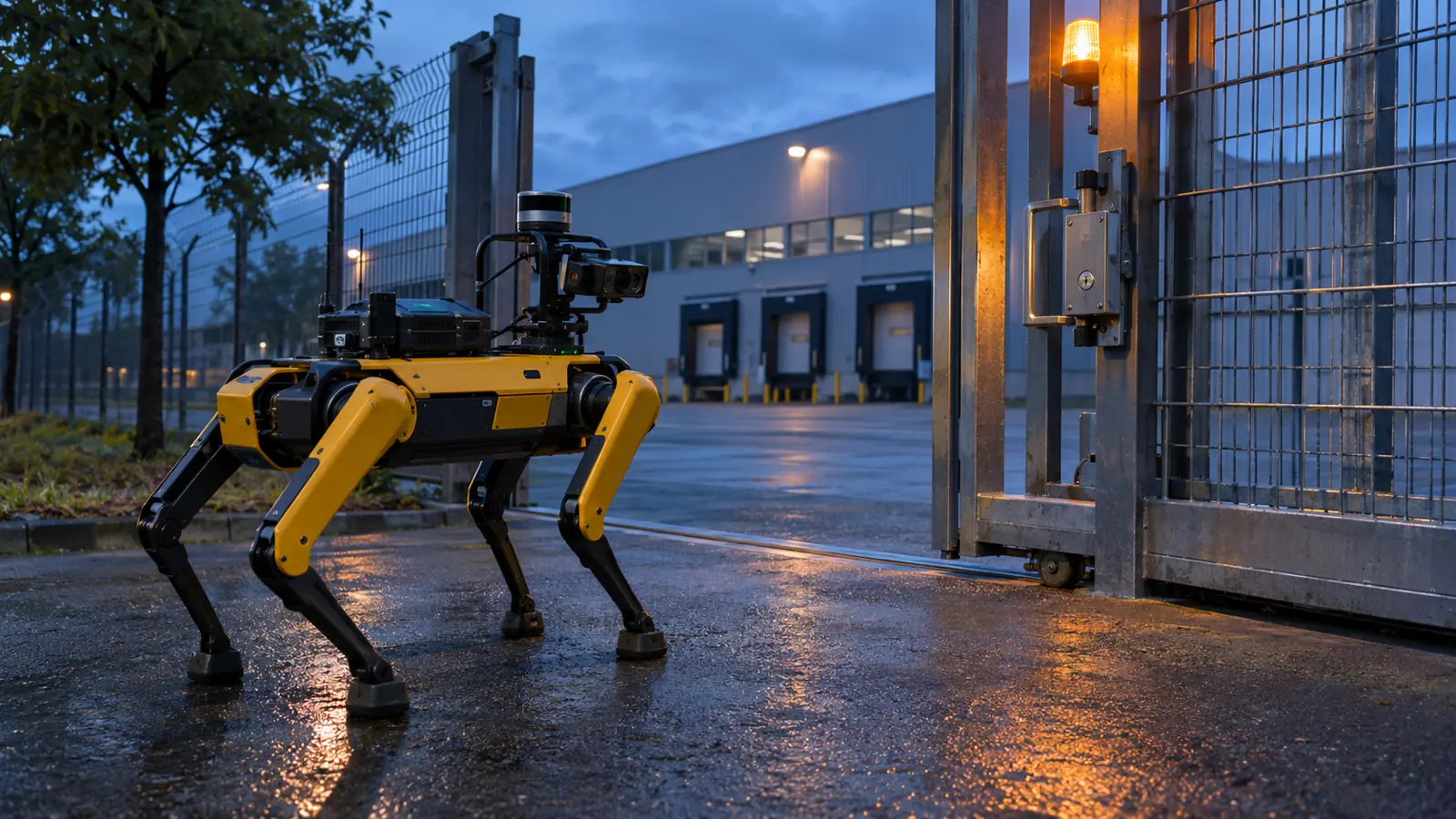
Under the concept announced by AETOS and dConstruct Robotics, robots could follow predefined patrol routes or gather additional information on site after an alarm. Boston Dynamics' Spot would be the primary platform, while the partners would also evaluate other robots for particular sites and missions. Proposed sensors include cameras and LiDAR, with thermal imaging, acoustic or environmental sensors where the task requires them. SJ Group announcement
The important distinction is that the robot is not presented as an independent security guard. The announcement says AETOS operators will assess the collected information within established security processes and decide the appropriate response. This approach is much closer to operational needs than the simplified idea of a robot autonomously resolving complex security situations.
The value of a robot lies in supporting decisions
Discussions of patrol robots often focus on the spectacle of movement. A quadruped walks along a fence, examines a gate or circles a plant area. Operationally, though, walking is only a means to an end.
Value arises when a robot reaches a position from which it can collect information useful to a security decision. For example, it could:
- check whether an external gate has actually been left open;
- provide images of a car park where an alarm has been raised;
- help identify movement detected near a protected area;
- establish whether an intrusion alarm is associated with an actual abnormal condition;
- reach an area where human verification would be slower, riskier or require more resources.
The robot is therefore best understood as a mobile sensor within an alarm verification process, rather than as an isolated technology product. It does not replace the dispatcher, the on-site security team or responders; it could give them a clearer operational picture.
The first test phase of the Singapore initiative is planned for the first quarter of 2027. The companies identify measurable categories rather than simply promising efficiency: patrol coverage and completion, system availability, alert-to-verification time, false alarm rates and response time. This matters because a robot proves its value only when its operation can be assessed with specific, comparable data. SJ Group evaluation plan
How could the two technologies work together?
In a future integrated protection model, drone detection and robotic alarm verification could logically build on each other.
Consider a hypothetical industrial or logistics facility where a sensing system reports unusual aerial movement nearby. Available data indicates a possible direction and zone. The video management system could then display relevant camera views, and an operator could decide whether to send a mobile robot to a suitable observation point.
The robot would not pursue the drone or replace an authorised specialist countermeasure. Its role would be more practical: examining the ground environment for a suspicious person, an open gate, damaged fencing, an unattended item or another condition related to the event. A human operator would assess the resulting video, thermal image or other sensor data.
The model connects two currently separate capabilities:
- the network could indicate unusual aerial movement across a wide area;
- the mobile robot could gather targeted information from the ground environment;
- the operator could make a decision using a shared operational picture.
The role of technology is to reduce uncertainty. It should help the decision-maker respond more quickly and with better context, rather than automatically classifying an event as a threat.
The real challenge: integration and operations
Success depends on more than the robot's mobility or the capabilities of radio sensing. The harder question is how the different systems fit together within security operations.
At least five areas need to be resolved in advance:
- Consistent event management. An alarm should make clear which system and zone generated it, who is responsible for assessing it, and what further verification is required.
- Accurate time and location data. Drone detections, camera images, access events and robot routes can be correlated reliably only when their time and spatial references are consistent.
- False alarm handling. Rapid detection has limited value if it produces too many false alarms. The goal is to improve the proportion of useful events, not to generate the largest possible number of alerts.
- Cybersecurity and data governance. Robots, sensors, the VMS and integration interfaces are all networked systems. Access control, logging, updates, network segmentation and secure remote access need to be part of the design.
- Clear human accountability. An alarm may be generated automatically and a robot may perform a pre-authorised task automatically, but responsibility for assessing the event and taking consequential action must be clearly assigned.
Design a better verification chain
The real value of autonomous technology in physical security is unlikely to be a single device that solves everything. It is more likely to come from linking sensors, cameras, networks, mobile platforms and people into a better organised verification chain.
The AT&T–Ericsson demonstration suggests that existing mobile networks could eventually serve as sensing infrastructure alongside their communications role. The AETOS–dConstruct development highlights the importance of gathering information from the scene during the first minutes after an alarm.
Both examples remain development or validation initiatives. The sound engineering conclusion is therefore not that these solutions are ready for every facility. It is that future security systems should be designed to accept new sensing sources, correlate events and support human decisions with fast, verifiable information.
Sources: AT&T: drone detection demonstration (July 10, 2026) · Ericsson: ISAC System (2026-11-02) · SJ Group: AETOS–dConstruct (2026-10-30)
Last reviewed:
Questions, or an idea to talk through?
Whether it is a security system, the IT network behind it or just a thought on this article, I am happy to hear from you.
Get in touch